
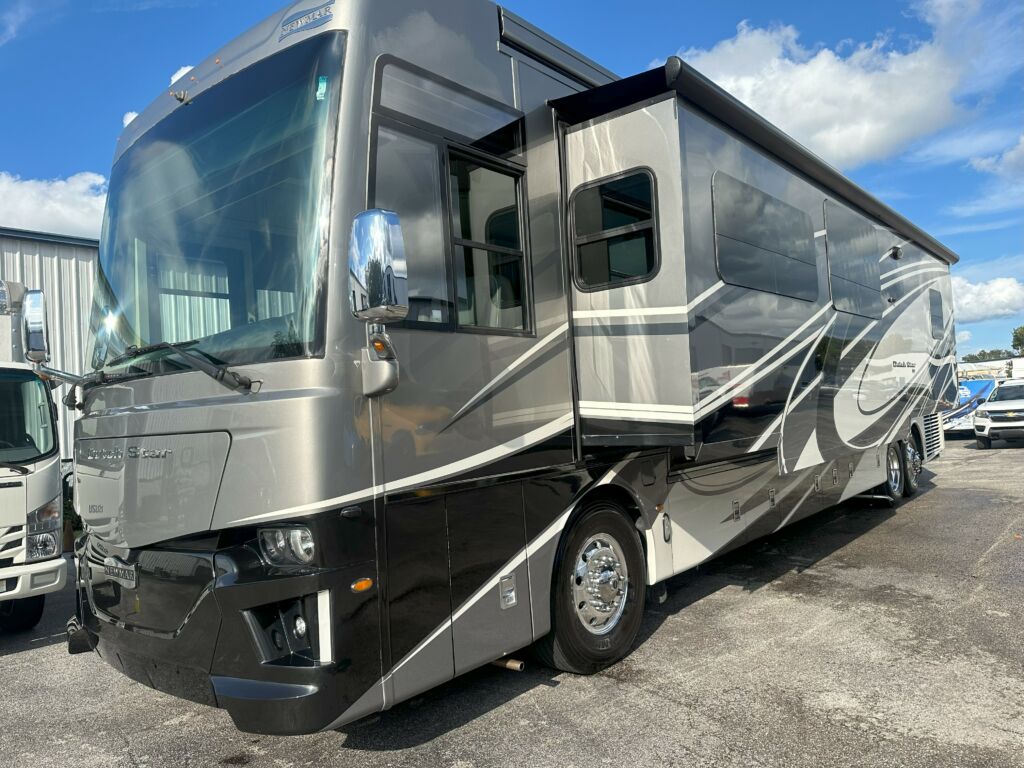
By Jason Smith, Owner — Polished 2 Perfection · Central Florida (Orlando · Ocala · The Villages · Deltona · Tampa) · Published September 29, 2026
You detail an RV top to bottom, exterior before interior, in this order: roof, then a full foam wash of the walls, then wax or a ceramic spray to lock in protection, then glass, then wheels and tires — and finally the inside. Done properly by one person it takes most of a day; professionals plan 6–12 hours for a full interior-and-exterior detail, and a big Class A can run into a second day. In Florida the two rules that matter most: work in the shade before the afternoon heat, and never let the sun bake soap or water spots into hot fiberglass.
Detailing an RV is not detailing a car five times over — it’s a different job with a different order, and getting that order wrong is how people streak their walls, burn their finish in the Florida sun, or spend all day and still miss the inside. Here’s the full checklist we work through on every rig: why the sequence matters, how long each stage actually takes, and how to decide whether this is a Saturday you want to spend or a job worth handing off.
What order do you detail an RV in?
Always work from the top down and from the outside in: roof, walls, protection, glass, wheels and tires, then the interior last. The roof comes first because whatever you scrub loose up there — chalky oxidation, tree sap, algae, bird mess — rinses straight down the sidewalls you’re about to clean, so cleaning the walls first just means cleaning them twice. Professional detailers follow the same top-down sequence: roof, roof protectant, full foam wash, wax or ceramic, glass, then wheels and tires (Fiberglass Worx lays out the identical seven-step order). The interior is last so you’re not tracking outside grime back through a cabin you’ve already cleaned.
Step by step: detailing the RV exterior
- Clean the roof. Get up top safely and rinse loose debris first, then use an RV-roof-specific cleaner for your roof type (EPDM/TPO rubber or fiberglass) and a medium-bristle brush on a long handle. The one place people cause damage is with a pressure washer — keep a wide nozzle two to three feet off the surface so you don’t blast your seals loose. A neglected roof is a job of its own; here’s RV roof cleaning and sealing if that’s where you’re starting.
- Treat the roof. Once it’s clean and dry, wipe on a UV protectant. Florida sun is what cracks and chalks a roof; a protectant buys months before the next treatment.
- Foam-wash the walls. Coat the whole rig in a dedicated RV wash from a foam cannon, let it dwell about five minutes to lift road film, then agitate top-to-bottom with a soft brush and rinse. Work one section at a time so nothing dries on.
- Protect the paint or gelcoat. With the surface clean and cool, apply wax or — better for Florida — a ceramic spray sealant. This is the step most owners skip and the one that actually fights our climate: a sealed surface sheds UV, water spots, and bug acid instead of soaking them up. If the finish is already chalky and faded, wax won’t fix it — that’s oxidation, and it needs correction first, not a coat of wax over the top.
- Glass. Spray automotive glass cleaner and buff with a clean microfiber, then a second dry towel to kill streaks. Do the windows in the shade — glass cleaner flashes off in seconds on a sun-hit window and streaks every time.
- Wheels, tires, and black streaks. Clean wheels and tires with a dedicated cleaner and a stiffer brush, then dress the tires (keep dressing off the tread). This is also when you knock down the black streaks running below the roofline, awnings, and windows. Heavy exterior restoration is our RV exterior detailing and oxidation service.
Don’t skip the inside: RV interior detailing
Most “how to detail an RV” guides stop at the tires — that’s the biggest gap in the DIY advice online. A camper is a rolling living room, kitchen, and bathroom, and Florida humidity means the inside grows things the outside doesn’t. A proper interior detail is a full vacuum including slide-out tracks and cabinets, a wipe-down of every hard surface, upholstery and carpet cleaning (extraction or steam for anything set-in), glass, and a real deodorize — not an air freshener sprayed over a musty smell. Budget real time for it: interior-only work runs 3 to 8 hours depending on how lived-in the rig is (per Eagle Star Detail’s timeline breakdown).
How long does it take to detail an RV?
Longer than people expect, because an RV has the surface area of several cars. Here’s what to plan for, from a professional timeline breakdown:
| Service | Typical time |
|---|---|
| Basic exterior wash | 2–4 hours |
| Exterior wash + wax/sealant | 4–6 hours |
| Interior detail (standard → deep) | 3–8 hours |
| Full interior + exterior detail | 6–12 hours |
| Oxidation removal (light → heavy) | 4–24+ hours |
| Full detail + ceramic coating | 16–24+ hours, often multiple days |
Three things move those numbers: size (a 40-foot Class A takes far longer than a 24-foot Class C), condition (heavy oxidation and neglect add hours), and services chosen (ceramic and oxidation removal can more than double the job). One owner detailing solo for the first time reported it took about eight hours start to finish — which is exactly why so many Florida owners book it out.
Central Florida is one of the harshest environments in the country for an RV finish, and every step above maps to a local problem. UV and heat chalk gelcoat into oxidation faster here than almost anywhere — a sealant or ceramic layer is your sunscreen. Humidity breeds mold and mildew on roofs, seals, and interiors, which is why the roof treatment and a real interior deodorize aren’t optional. Love bugs twice a year leave an acidic residue that etches clear coat if it bakes on — get it off soft and soon, never scrubbed dry. And afternoon storms and hard water leave mineral spots that a protected surface sheds instead of absorbing. The single most important Florida habit: wash in the morning, in the shade — start by 8 a.m. and get the wet work done before the midday sun turns your sidewalls into a griddle.
Should you detail your RV yourself or hire a pro?
Do it yourself if you have a full day, a safe way onto the roof, a pressure washer you trust near your seals, and the right RV-specific products — a basic wash-and-wax is absolutely a DIY job. Hire it out when the finish is oxidized, when you’re prepping to sell, when climbing a 12-foot roof in July isn’t happening, or when you’d simply rather spend the weekend using the RV. Full-service RV detailing commonly runs in the range of $7–$10 per foot (per RV owners comparing quotes) — so a 30-foot rig is a real number, but so is a full Saturday of ladder work in Florida heat, plus products and the risk of burning your seals with a pressure washer. Because we’re mobile across Central Florida, we come to your home or storage lot — you don’t drive a 35-foot coach anywhere. If you’re weighing it, the fastest answer is a free RV detailing quote on your exact rig and its condition.
Rather not spend the weekend on a ladder?
We detail RVs and motorhomes the right way — roof to interior, oxidation correction, and ceramic protection built for Florida sun. We come to your driveway, storage lot, or campsite anywhere in Central Florida.
How often should you do all this?
In Florida, a wash every four to six weeks and a fresh coat of protection a few times a year is the realistic floor to stay ahead of oxidation — more if the RV lives outside uncovered. A long-term ceramic coating stretches the interval between hard details by shedding UV and dirt in between, and we break the full schedule down in how often you should wash and wax an RV in Florida. For what a full detail actually costs here, see our Central Florida RV detailing cost guide.
Key takeaways
- Order matters: roof → walls → wax/seal → glass → wheels/tires → interior last. Top-down, outside-in.
- Plan for time: a full interior-and-exterior detail is 6–12 hours; a Class A with oxidation or ceramic can run into a second day.
- Don’t skip the inside — Florida humidity means the interior needs a real deep-clean and deodorize, not a spray-over.
- Protect the finish with wax or ceramic; it’s the step that fights UV, love-bug acid, and water spots.
- The Florida rule: wash in the morning shade — never let soap or water dry on hot fiberglass.
Frequently asked questions
How long does it take to detail an RV?
A basic exterior wash is 2–4 hours; a full interior-and-exterior detail is typically 6–12 hours, and a large Class A with oxidation removal or ceramic coating can run into a second day. Size, condition, and the services you choose drive the time.
What order do you clean an RV in?
Top to bottom, outside to inside: roof, then walls, then wax or sealant, then glass, then wheels and tires, and the interior last so you don’t track grime back through it. Cleaning the roof first matters because its runoff streaks any walls you’ve already washed.
Is it worth detailing an RV myself?
A wash and wax, yes — if you have a full day and safe roof access. Oxidation removal, ceramic coating, and pre-sale details are where most owners hire out: they’re time-consuming, physically demanding, and easy to get wrong on gelcoat. Weigh the roughly $7–$10 per foot of a pro detail against a full Saturday of ladder work in Florida heat.
Can you pressure wash an RV?
Yes, carefully — use a wide nozzle and stay two to three feet back, especially around roof seams and sealant. A narrow tip held close can strip the sealant that keeps water out of your roof, turning a wash into a leak repair.
Do I need ceramic coating or is wax enough?
Wax protects for a couple of months; a ceramic coating lasts far longer and sheds Florida UV, bug acid, and water spots better, which is why we usually recommend it here. See our RV ceramic coating page for what it costs and how long it lasts.
How much does RV detailing cost in Central Florida?
It’s commonly quoted per foot and depends on length and condition. We break down real local pricing in our RV detailing cost guide, or you can get a free quote on your exact rig.
Owner — Polished 2 Perfection Mobile Detailing
Jason runs Polished 2 Perfection, a mobile auto, RV, and marine detailing service based in Central Florida. He and his team wash, detail, and ceramic-coat everything from travel trailers to 40-foot Class A motorhomes on-site across Orlando, Ocala, The Villages, Deltona, and Tampa — so the advice here comes from real Florida driveways and storage lots, not a product label.