
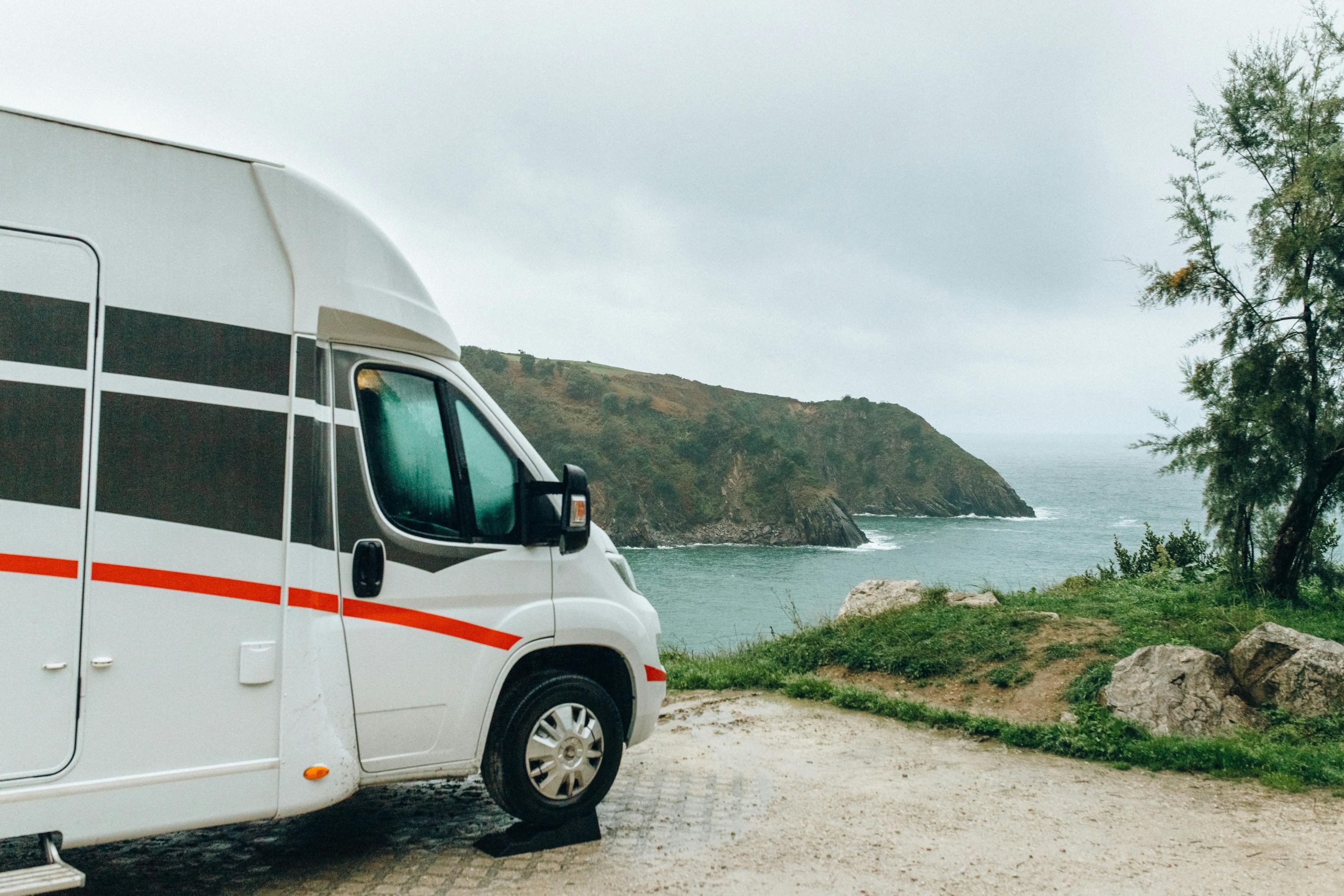
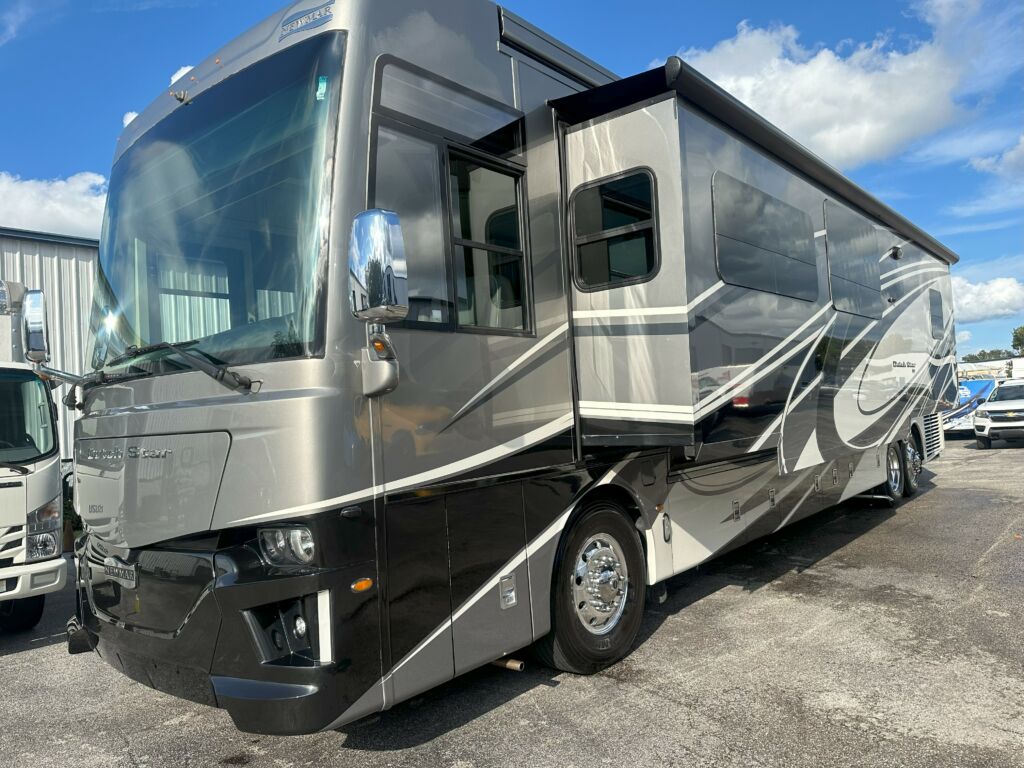
How often an RV needs washing and waxing in Florida comes down to one thing: how much sun it sits in.
In Central Florida, wash your RV every 2–4 weeks and wax it every 8–12 weeks (roughly quarterly) if it lives outside. That is far more often than the “wax once or twice a year” you will read on national RV sites, and there is a reason for it. Our sun strips a coat of wax in about 6–8 weeks, so a rig waxed only in spring is running on bare fiberglass by July.
One catch: if your RV is already chalky and dull, waxing will not bring it back. That is oxidation, and it has to be corrected first.
Below is the schedule we actually give customers, why Florida rewrites the rulebook, how long each kind of wax really lasts down here, and the point where a bottle of wax stops being the answer.
How often should you wash and wax an RV in Florida?
Wash every 2–4 weeks and wax every 8–12 weeks if your RV is stored outdoors, then adjust from there based on how it is parked. The single biggest variable is not how much you drive it. It is how much sun it sits in between trips. An RV is parked far more than it is driven, and in Florida “parked outside” means eight-plus months a year of high-UV exposure working on the finish.
Here is the frequency we recommend by storage situation:
| How your RV is stored | Wash | Wax / sealant |
|---|---|---|
| Outdoors, used most weekends | Every 2 weeks | Every 8 weeks |
| Outdoors, used occasionally | Every 3–4 weeks | Every 8–10 weeks |
| Under a carport or RV cover | Every 4–6 weeks | Every 10–12 weeks |
| Indoor / enclosed storage | Before & after each trip | Twice a year |
Washing removes what is actively attacking the surface: bug acids, tree sap, bird droppings, and the hard-water minerals our afternoon storms leave behind. Waxing keeps a sacrificial layer of protection on top of the gelcoat, so UV hits the wax instead of the fiberglass. When that wax layer burns off and nobody replaces it, oxidation starts, and that is a much bigger bill than a wash.
From our own jobs: on an unprotected Florida rig, a fresh coat of wax beads and sheets water for roughly six to eight weeks before you notice the water starting to sit flat instead of running off. That flat-water moment is your real reminder the protection is gone, not the calendar date six months out.
Why does Florida burn through RV wax so fast?
Florida carries one of the highest year-round UV loads in the country. By annual UV irradiance it ranks second only to Hawaii among U.S. states (state UV-index rankings; see also the EPA UV Index). Wax is a sacrificial coating, so the more UV energy hitting it, the faster it breaks down. The same sun that makes you reach for sunscreen most of the year is doing the identical thing to the coating on your roofline.
Heat compounds it. A white Class A roof still bakes past 130°F on a summer afternoon, and that heat softens and flashes off wax far quicker than the mild conditions the national “twice a year” advice assumes. Then there is our daily summer rain, which is not clean. Florida rain picks up minerals and drops them on hot fiberglass, where they dry into hard-water spots that etch a bare surface.
The material matters too. Most RVs are fiberglass with a gelcoat finish, which is more porous and less protected than the clear coat on your car. It drinks up UV damage faster and needs that wax barrier more, not less. Put a porous surface, our climate’s punishing UV, 130-degree roof temps, and mineral-heavy rain together, and a coat of wax simply does not get to live as long here as it does up north.
How long does RV wax actually last in the Florida sun?
It depends on what you put on, but plan on weeks, not months. Here is the honest range we see on Florida rigs versus the numbers national guides quote:
| Product | Often quoted (national) | Realistic on a Florida RV outdoors |
|---|---|---|
| Spray wax / quick detailer | 4–6 weeks | 2–3 weeks |
| Liquid synthetic wax or sealant | 3–6 months | 6–10 weeks |
| Paste carnauba wax | 2–4 months | 4–6 weeks |
| Ceramic coating (professional) | 2–5 years | 2–5 years |
Synthetic sealants outlast natural carnauba in our heat, which is why we reach for a polymer sealant on maintenance jobs instead of a soft paste wax that melts off by the next month. But notice the pattern: every traditional wax lives a fraction of its advertised life once you park it in Central Florida. If you are waxing on a national schedule, you have been unprotected for most of the year without knowing it.
Can you wax an RV that’s already oxidized? (Short answer: no)
Waxing an oxidized RV will not fix it, and it can make the rig look worse. This is the mistake we see most, and RV forums are full of owners who learned it the hard way. They buy an older coach, it is hazy and chalky, they throw a coat of wax at it, and it comes out blotchy and streaked. Wax is a clear protective layer. Smear it over a surface that has already broken down into chalk and you are just sealing the haze in and highlighting it.
Here is the simple test we tell people to run before they buy any wax: wipe a clean, dark microfiber across the side of the RV. If it comes back with a white, chalky residue, that is oxidized gelcoat, not dirt. No wax will reverse it. That surface has to be machine-compounded and polished to cut through the dead oxidized layer first, which is professional RV oxidation removal, and then it gets sealed or coated to protect the restored finish.
This is exactly why the schedule matters. Almost every chalky, oxidized rig we are called out to restore has the same history: it was waxed “once a year” or “when it looked dirty,” never on a real schedule. Stay ahead of it and you keep paying wash prices. Fall behind and you eventually pay restoration prices.
Wash vs. wax vs. ceramic coating — what does your RV actually need?
People use these three words interchangeably, but they are completely different jobs:
| What it does | How long it lasts (FL) | Best for | |
|---|---|---|---|
| Wash | Removes dirt, bugs, sap, minerals | Until it gets dirty again | Every rig, every few weeks |
| Wax / sealant | Adds a sacrificial UV / protection layer | 6–12 weeks | Rigs in good shape, kept on schedule |
| Ceramic coating | Bonds a hard, UV-resistant layer to the gelcoat | 2–5 years | Owners tired of re-waxing all season |
Washing is non-negotiable and forever. Wax is the maintenance layer between details. Ceramic is the upgrade that gets you off the every-8-weeks cycle entirely, and in Florida that math works out better than most people expect. A professional RV ceramic coating costs more up front than a season of waxing, but one coat replaces years of wax jobs and, more importantly, blocks the UV that causes the oxidation restorations that run $600–$1,200+ on a big rig. We lay out the full price picture in our RV detailing cost guide for Central Florida. If you keep your RV several years, coating it once is usually the cheaper path down here.
A realistic Florida RV wash-and-wax routine
If you are doing it yourself, the order and the conditions matter as much as the products. A wash-and-wax on a 30-foot-plus rig is genuinely a half-day job. Most owners on RV forums put it at two to five hours depending on size and how long it has been. Here is the sequence we would use:
- Work in the shade, early. Never wash or wax a hot RV in direct Florida sun. Soap and water dry before you can rinse, and you will trade dirt for hard-water spots. Early morning or a shaded storage bay is ideal.
- Rinse top-down first. Knock off loose grit before you touch the surface so you are not grinding it in. Start at the roofline and work down.
- Use an RV-safe, pH-neutral soap, not dish soap. Dish soap strips whatever protection is left and dries out seals and decals. Use a soft brush on an extension pole for the upper walls and roof.
- Dry it before it air-dries. In our humidity, standing water spots fast. A clean microfiber or a blower keeps minerals from etching in.
- Wax panel by panel, in the shade. Thin, even coats of a synthetic sealant, one section at a time so it does not flash in the heat before you buff it off. Skip the roof for wax and focus on the vertical fiberglass that takes the sun.
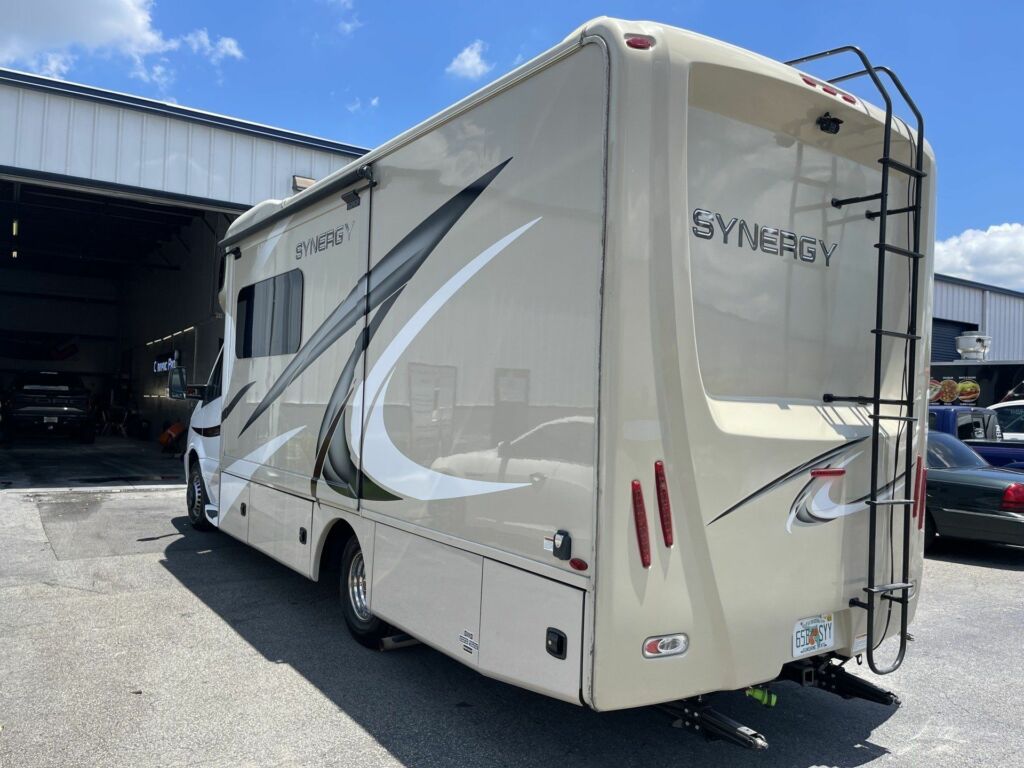
Most of an RV’s life is spent parked in the sun, which is why wax frequency, not mileage, drives the schedule.
If that sounds like a lot of ladder time in the heat, it is. That is the honest reason a lot of Central Florida owners hand the recurring job off.
When to stop DIY-ing and call a pro
A bottle of wax is the right tool right up until it is not. Bring in a professional detail when:
- The finger-swipe test shows chalk. You need correction, not wax.
- Black streaks down the sides will not come off with a normal wash.
- You have a big Class A or fifth wheel and a day of ladder work in the sun is not happening.
- You simply want it kept on schedule without doing it yourself.
That is the whole reason we run a mobile service. We bring the water, power, and gear to your driveway, storage lot, or campsite anywhere in Central Florida, so mobile RV detailing in Orlando does not cost you a day off. Whether it is a maintenance RV exterior detail or a full oxidation restoration, the goal is the same: get the rig back on a schedule that beats Florida’s sun instead of chasing it.
Key takeaways
- Wash every 2–4 weeks, wax every 8–12 weeks on an outdoor RV in Central Florida, not the national “once or twice a year.”
- Florida’s UV (second only to Hawaii), 130°F roof heat, and mineral-heavy rain strip wax in 6–8 weeks.
- Synthetic sealants outlast paste carnauba in our heat, but every wax lives a fraction of its advertised life here.
- You cannot wax away oxidation. Chalk on a swipe test means the gelcoat needs correction first.
- Tired of re-waxing all season? A ceramic coating lasts years and blocks the UV that causes costly oxidation.
Frequently asked questions
How often should I wax my RV in Florida?
Every 8–12 weeks, about quarterly, if it is stored outdoors. Florida’s sun burns off a coat of wax in roughly 6–8 weeks, so the “once or twice a year” advice written for milder climates leaves your fiberglass unprotected for most of the year here.
How long does wax last on an RV in the Florida sun?
Spray waxes last about 2–3 weeks, paste carnauba about 4–6 weeks, and a good synthetic sealant 6–10 weeks, all shorter than the national numbers because of our UV and heat. A ceramic coating is the exception, lasting 2–5 years.
Can I just wax over oxidation to fix a dull RV?
No. Wax is a clear layer, so over chalky, oxidized gelcoat it seals the haze in and often looks blotchy. Oxidation has to be machine-compounded and polished out first, then the fresh surface is sealed or ceramic-coated.
Is ceramic coating better than waxing an RV in Florida?
For most owners who keep their rig a few years, yes. Wax needs redoing every 8–12 weeks here, while a ceramic coating lasts years and blocks the UV that causes oxidation, so it usually costs less over time than repeated waxes and corrections.
What kind of soap should I use to wash my RV?
An RV-safe, pH-neutral wash, not dish soap. Dish soap strips any remaining protection and dries out decals and rubber seals. Wash in the shade and dry the surface before Florida’s humidity leaves hard-water spots.
How long does it take to wash and wax an RV?
On a 30-foot-plus rig, plan on two to five hours depending on size, condition, and how long it has been. Much of that is ladder and extension-pole time on the upper walls and roof, which is why larger Class A coaches are often handed to a mobile detailer.

Jason Smith
Owner — Polished 2 Perfection Mobile Detailing
Jason runs Polished 2 Perfection, a mobile auto, RV, and marine detailing service based in Central Florida. He and his team detail everything from campervans to 40-foot Class A coaches across Orlando, Ocala, The Villages, and Tampa, so the schedules and numbers here come from real Florida jobs, not a generic chart.
Rather keep your rig on schedule without the ladder work? We come to your driveway, storage lot, or campsite anywhere in Central Florida.
Get my free RV detailing quote