If your RV’s finish is flaking off in thin, shiny sheets over a duller, lighter layer, that’s clear coat peeling — real paint failure that can’t be buffed, waxed, or ceramic-coated back; the fixes are a spot repaint, a vinyl wrap, or a full respray. But run the 20-second rag test first, because at least half the Central Florida RVs we’re called about for “peeling clear coat” actually have gelcoat oxidation — a chalky surface layer we restore by the foot, starting around $900 for a 30-foot coach.
I’m Jason, owner of Polished 2 Perfection. We’re a mobile RV detailing crew working Orlando and Central Florida, and clear coat is one of the most misunderstood problems we get asked about. Here’s how to tell what you’re actually dealing with, what it costs to fix each one, and how to keep a healthy finish from getting there in the first place.
First: is it clear coat, or is it gelcoat oxidation?
This is the whole ballgame, so do this before anything else. Run your hand or a clean rag firmly across the dull area and look at what happens.
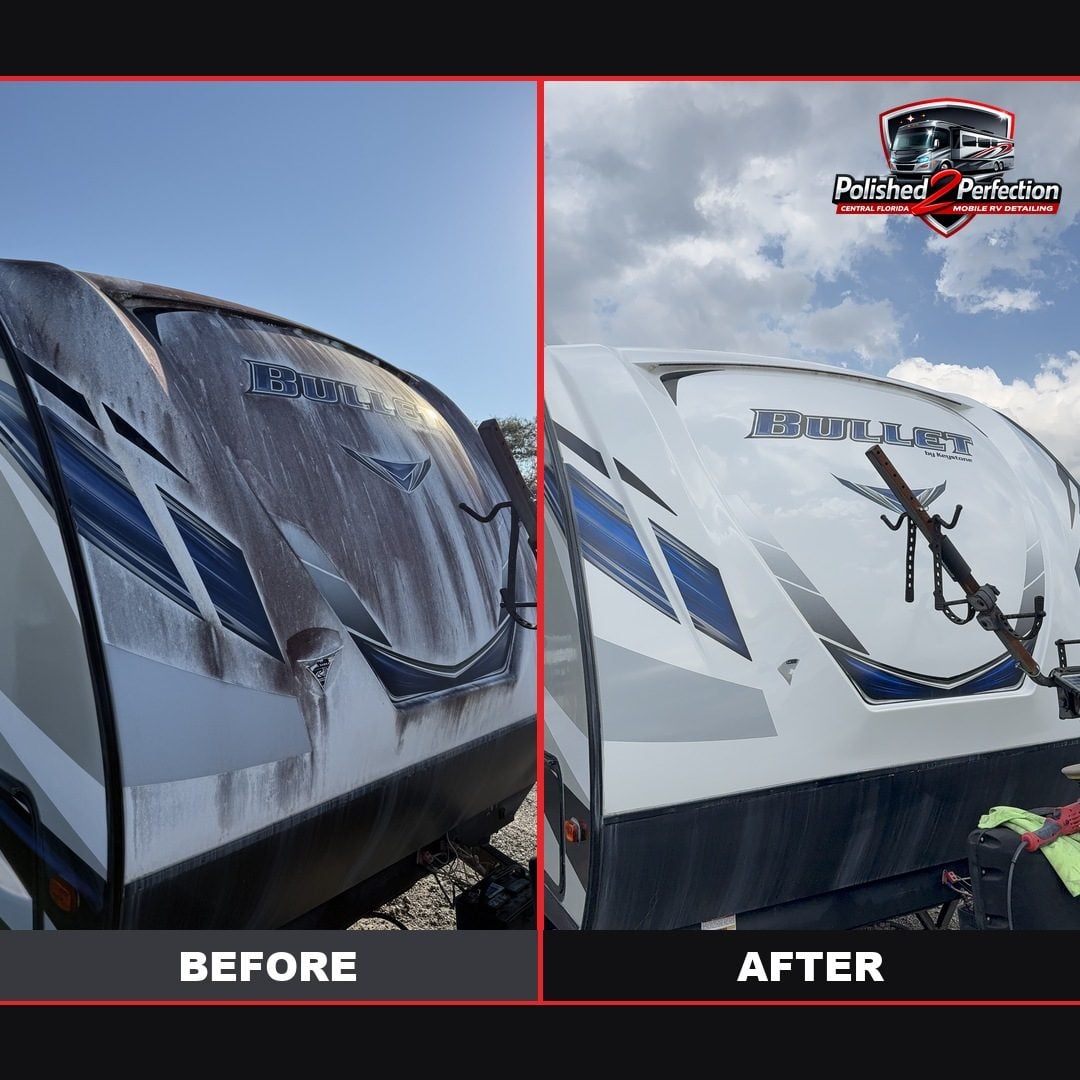
If you come away with a chalky, powdery white residue on your hand and the surface is dull but still fully intact, with no flaking and nothing lifting, that’s gelcoat oxidation. The white “RV finish” on most fiberglass campers and trailers is pigmented gelcoat, and Florida sun breaks down its top few microns into that chalk. It feels like a problem but it’s a surface layer, and machine compounding cuts it off to reveal glossy gelcoat underneath. That’s the restorable one.
If instead the finish is lifting, cracking, or flaking in sheets, and underneath the shiny top layer there’s a flatter, lighter-colored paint or bare primer, that’s clear coat delamination. This happens on painted RVs — most Class A diesel pushers, newer fifth wheels, and any coach with full-body paint rather than plain gelcoat. The clear coat is the sacrificial top layer that protects the color coat and blocks UV. Once it lets go, there’s no polishing it back; the only real fixes involve paint.
| What you see | Gelcoat oxidation | Clear coat peeling |
|---|---|---|
| Surface feel | Chalky, powdery; rubs off white on a rag | Lifting, cracking, flaking in sheets |
| What’s underneath | Glossy gelcoat once the dead layer is cut off | A flatter, lighter color coat or bare primer |
| Found on | Fiberglass/gelcoat sidewalls (most trailers & campers) | Painted coaches (many Class A, full-body-paint rigs) |
| The fix | Machine compounding + sealant (detailing) | Spot repaint, vinyl wrap, or full respray (paint shop) |
| Ballpark | From $20–$30/ft; ~$900 for a 30-ft coach | ~$800–$2,500 a cap up to $8,000–$15,000+ full |
Two different problems, two different price tags, and telling them apart is the single most useful thing you can do before spending a dollar.
Why RV clear coat peels — and why Florida is the worst place for it
Clear coat peeling is almost always UV damage, and Central Florida is about the hardest environment in the country for it. Relentless year-round sun, heat, and humidity break the bond between the clear coat and the color coat beneath it. Heat cycles — scorching afternoons, cooler nights, then an afternoon storm — make the layers expand and contract until the top one lifts. On the iRV2 motorhome forums you’ll find owner after owner whose cap peeled, got repaired, and peeled again after “too much time in Florida.”
Two other causes show up a lot. The first is a factory or prior-repair defect: if a previous shop sprayed incompatible layers of paint, they separate over time no matter where you park — Coach Specialists of Texas, an RV paint shop, names exactly this in their write-up on delamination. The second is simple age plus exposure; most peeling we see starts on the highest-sun surfaces, the front cap above the windshield and the tops of the rear cap, because those take the most direct UV. One pattern worth knowing: lighter colors hold up noticeably longer than dark ones, which is why factory RV paint schemes lean light.
And it spreads. A palm-sized patch this year becomes a cap-wide problem the next, because once the clear coat is breached, the color coat and the body underneath lose their buffer against water and sun. Catching it small is a lot cheaper than catching it late.
Can peeling clear coat be repaired — or do you have to repaint?
If it truly is the clear coat, your options run from a cheap patch to a full respray, and they trade cost against how long they last. Here’s the honest ranking, pulled from what actually holds up versus what looks good for a season.
| Option | Roughly what it costs | How long it lasts | Honest take |
|---|---|---|---|
| Live with it + seal the edges | A can of product + an afternoon | Slows the spread, doesn’t fix looks | Fine as a holding move on an older rig |
| DIY spot repair (2-part clear in a can) | $20–$60 | 1–2 years, then it goes again | Prep is everything; usually looks like a patch |
| Vinyl wrap the affected panels | A few hundred up to ~$1,500+ | 3–7 years | Great value; a good shop can color-match a cap |
| Professional spot repaint (one cap) | ~$800–$2,500 | Long, if the layers are compatible | The sweet spot for a single bad cap |
| Full-body repaint | $8,000–$15,000+ | Longest | Only when delamination is everywhere |
A couple of things experienced owners and painters will tell you, and they’re right. You can’t really “repair” clear coat in place, because the sanding needed to feather it in cuts into the color coat, so you end up repainting that section anyway. And a rattle-can clear job over a quick 400-grit sand will look shabby and typically fails again inside a year or two. If the peeling is confined to the caps, a lot of smart owners either have a shop respray just those panels or wrap them — both beat a five-figure full repaint on a coach you might not keep forever.
What this costs if it’s actually oxidation (the good news)
Here’s why the test at the top matters so much. If that dull area turned out to be gelcoat oxidation, not clear coat failure, you’re looking at a detailing job, not a paint job — and the number is a lot smaller.
We price RV oxidation work by the linear foot. Light dullness is often handled by our $20/ft Enhancement polish. True oxidation removal, our Restoration service, starts at $30 per foot, by estimate, so a 30-foot Class A starts around $900, versus the many thousands a repaint runs. Every Restoration finishes with a protective sealant, because freshly compounded gelcoat left bare in Florida starts hazing again within months. If you want the full walkthrough of that process, we laid it out in our guide to RV oxidation removal in Florida, and we come to your driveway or storage lot to do it as part of our mobile RV detailing in Orlando.
What a detailer can and can’t do about peeling clear coat
I’d rather tell you the truth than win a job I can’t do well. A mobile detailer, us included, cannot bring peeled clear coat back. There’s no compound, polish, or ceramic coating that re-bonds a clear coat that has already delaminated. Anyone who tells you a “ceramic coating” will fix active peeling is selling you something that won’t work.
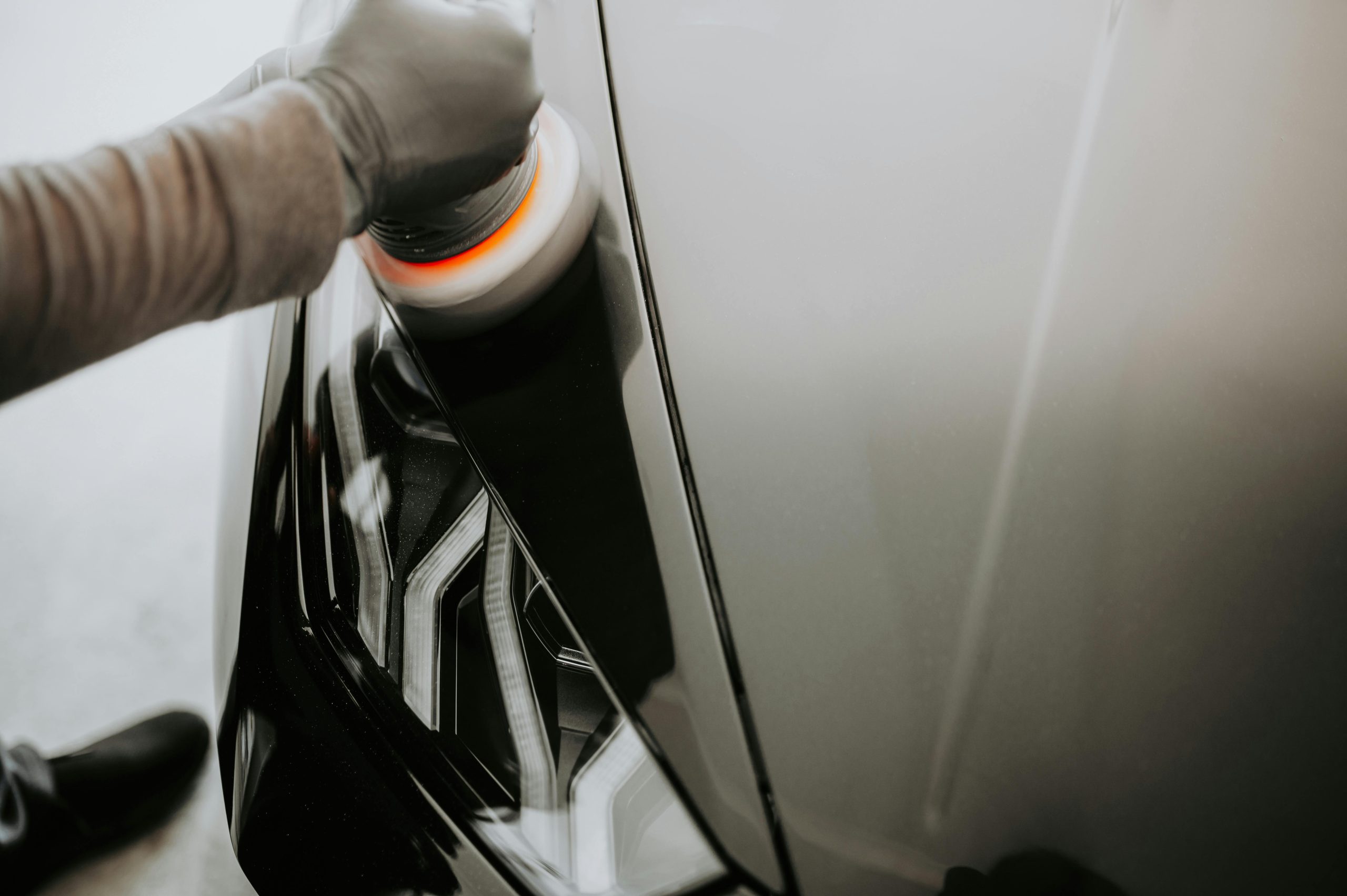
What we genuinely can do is three things. We can diagnose which problem you actually have, on-site, before you spend money on the wrong fix. We can restore and seal the gelcoat portions of a mixed-surface coach, and correct and polish healthy painted panels with paint correction so the rig looks sharp everywhere the clear coat is still sound. And — this is the one that saves owners the most money long-term — we can protect the clear coat that hasn’t failed yet. That’s the whole case for acting before it starts.
How to stop clear coat from peeling in the first place
Since the cause is UV and heat, prevention is a UV problem. Three things move the needle in Florida, in order of impact.
Keep it covered or shaded. An RV stored under a carport or cover ages its finish far slower than one baking in an open lot — the same reason an uncovered, unsealed rig down here shows noticeable oxidation in two to three years when a northern RV takes five or more. Second, keep a protective layer on the finish. A ceramic coating for your RV is the strongest readily available UV barrier; it won’t rescue failed clear coat, but on a healthy finish it dramatically slows the breakdown that leads to peeling and chalking, and it’s the single best insurance on a newer coach. Third, wash the salt, bug acid, and road film off regularly so nothing sits on the surface accelerating the damage, and get ahead of Florida sun damage while it’s still a $20/ft polish and not a problem that’s spread.
The theme across all three: the cheapest version of every one of these conversations is the one you have before the damage is visible.
Key takeaways
- Do the rag test first: chalky white residue on an intact surface is gelcoat oxidation (restorable by detailing); flaking sheets over a lighter layer is clear coat delamination (a paint repair).
- Clear coat peeling is mostly UV and heat damage, and Central Florida is one of the worst climates for it — it starts on the sun-baked caps and spreads if ignored.
- Peeled clear coat can’t be buffed, waxed, or ceramic-coated back; real fixes are a spot repaint (~$800–$2,500 a cap), vinyl wrap, or full repaint ($8,000–$15,000+).
- If it’s actually oxidation, our Restoration starts at $30/ft by estimate — a 30-ft Class A starts around $900, a fraction of a repaint.
- A detailer can’t re-bond failed clear coat, but can diagnose it, restore the gelcoat and healthy panels, and protect sound clear coat so it doesn’t get there.
Frequently asked questions
My RV clear coat is peeling — is there anything I can do myself short of repainting?
On a small area, yes, but set your expectations. A two-part clear coat from a can over a careful 400-grit sand can blend a palm-sized patch and buy you a year or two, but it usually reads as a patch and tends to lift again. For a whole cap, a shop respray of just that panel or a vinyl wrap lasts far longer for the money than chasing it with spray cans.
How do I know if it’s clear coat peeling or just oxidation?
Rub the dull area with a clean rag. If you get chalky white powder on an otherwise intact surface, that’s gelcoat oxidation and it polishes out. If the finish is flaking or lifting in sheets and there’s a flatter, lighter layer underneath, that’s clear coat delamination on a painted coach — and that one needs paint, not polish.
Can a ceramic coating fix peeling clear coat?
No. A ceramic coating can’t re-bond a clear coat that has already let go, and anyone claiming it will is overselling it. Ceramic coating is prevention: on a finish that’s still healthy it blocks the UV that causes peeling in the first place, which is exactly why it’s worth putting on a newer RV before trouble starts.
What does it cost to fix peeling clear coat on an RV?
It depends on how far it’s spread. A DIY can is $20–$60, a professional spot repaint of a single cap is roughly $800–$2,500, vinyl wrapping the affected panels runs a few hundred to around $1,500-plus, and an all-over respray is commonly $8,000–$15,000 or more. Catching it while it’s confined to one cap is the difference between those last two numbers.
Why does my RV clear coat keep peeling again after it’s repaired?
Usually because the underlying cause wasn’t addressed or the layers aren’t compatible. Florida UV and heat keep working on the repair, and if the original failure came from incompatible paint layers, a new clear coat over the same problem will separate again. Compatible materials, proper prep, and keeping the rig out of constant sun are what make a repair hold.
Is clear coat peeling covered under warranty?
Sometimes, if the coach is newer and the failure traces to a manufacturing or paint defect rather than age. It’s worth checking your RV and paint warranties before you pay out of pocket, because factory delamination is a known issue on some painted coaches.
Do you repair peeling clear coat?
We don’t repaint — that’s a body and paint shop’s job — but we come to you anywhere in Central Florida to tell you for certain whether it’s clear coat or oxidation, restore and protect everything that is detailing’s job, and coat the healthy finish so it doesn’t keep spreading. If you’re not sure what you’ve got, that on-site diagnosis is the cheapest first step.

Jason Smith
Owner, Polished 2 Perfection Mobile Detailing · Central Florida
Jason runs Polished 2 Perfection, a mobile RV and auto detailing service based in Orlando serving Central Florida. He and his crew restore sun-faded, oxidized RVs on-site across the region and tell owners straight when a finish problem is a detailing job and when it’s a paint shop’s.
Not sure if it’s clear coat or oxidation?
Send us a photo and we’ll tell you what you’re actually looking at — then bring the fix to your driveway or storage lot anywhere in Central Florida.
Get a mobile RV quote