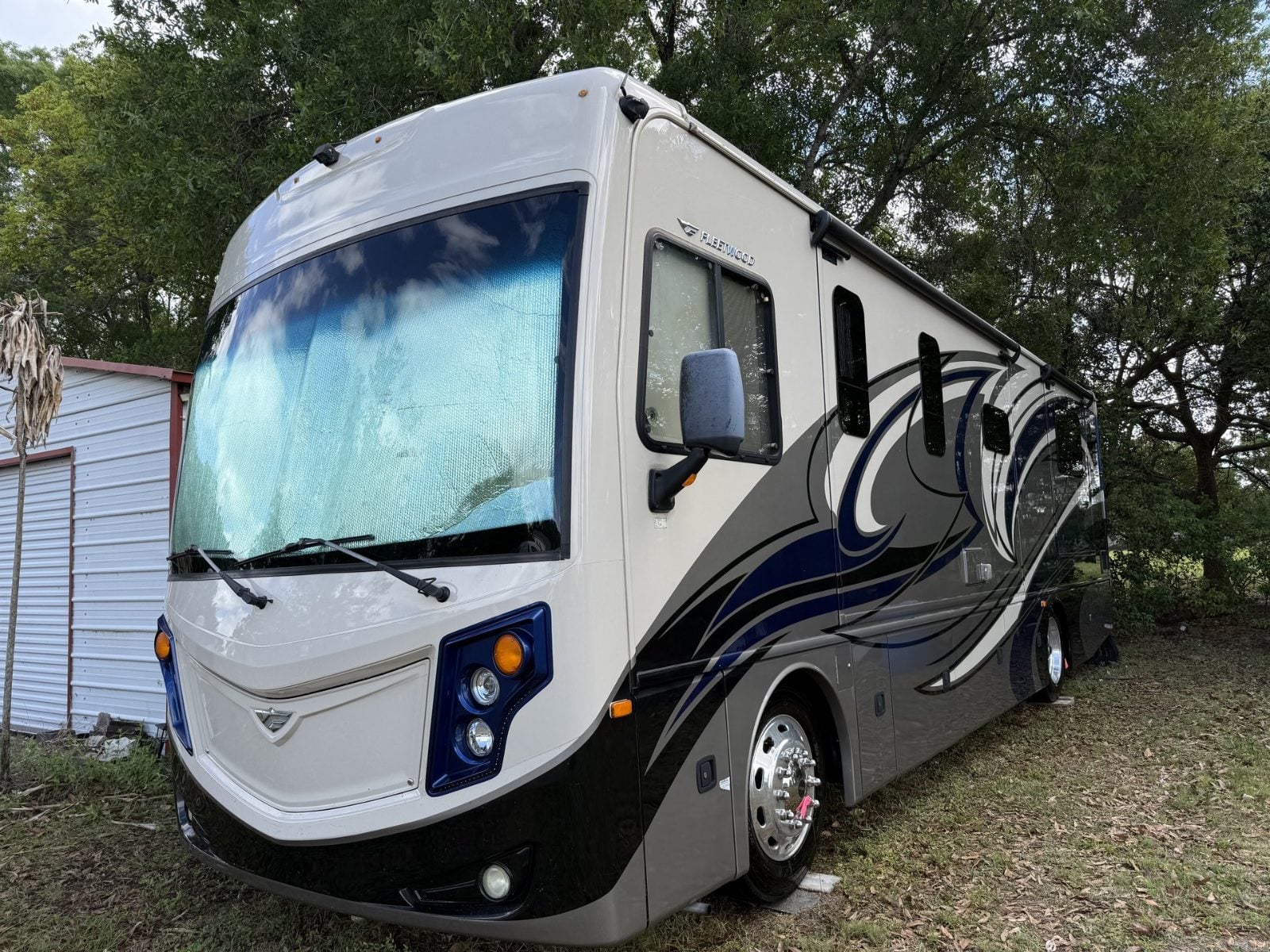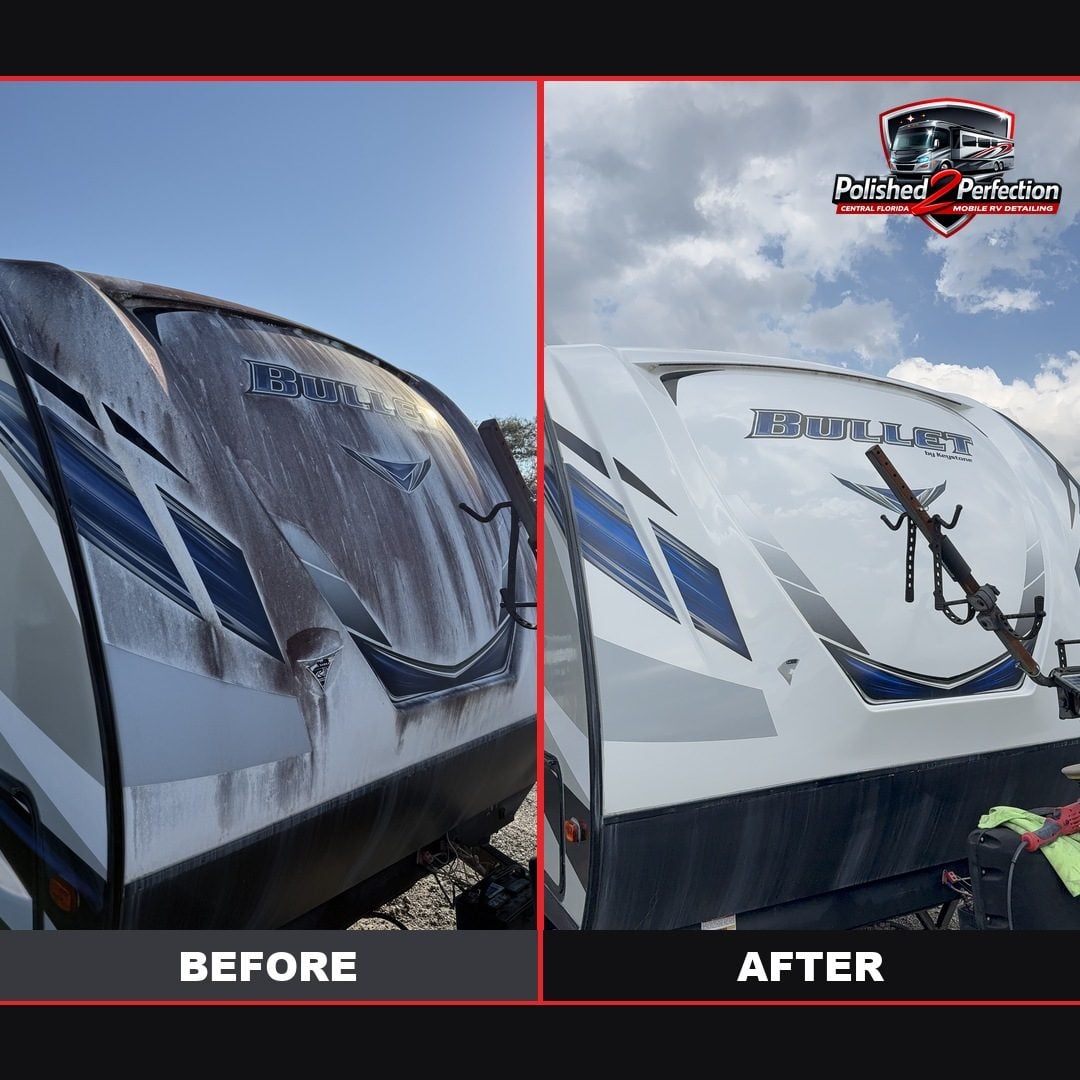
Detailing a motorhome is a different job from detailing a car, and it changes again with the class of coach you own. A Class B camper van is close to a big auto detail. A 43-foot Class A is a two-day project with ladder work, roof equipment, and more gelcoat to protect than ten cars combined. This guide covers what a motorhome detail actually involves in Central Florida, what changes between Class A, B, and C, what to budget, and how to keep Florida’s sun from turning a wash job into a restoration.
Around Orlando we detail coaches on-site every week: everything from Airstream travel trailers to Class C rigs and big Class A motorhomes, in driveways, storage lots, and campgrounds from Deltona to The Villages. One pattern repeats. Owners who book on a schedule pay wash-and-protect prices, and the ones who wait until the fiberglass goes chalky pay restoration prices. The class of the coach decides how big either number gets.
Is detailing a motorhome just a big car detail?
No, and treating it like one is how owners wreck a finish. Three things make a coach its own job. First, surface area: a 35-foot motorhome has roughly eight to ten times the exterior of a sedan, so every step takes hours, not minutes. Second, height and the roof: the upper walls and the roof sit well above head height and have to be reached with ladders or scaffolding, and the roof itself (EPDM, TPO, or fiberglass) needs its own cleaner and is where the black streaks down your sidewalls come from. Third, the surface itself: most coaches are gelcoat over fiberglass, not automotive paint, and gelcoat oxidizes into a chalky, dull haze under UV far faster than clear coat does. Wax over oxidized gelcoat does nothing; it has to be machine-corrected first. That combination of size, height, and gelcoat is why a motorhome detail is priced and scheduled like a small project rather than an errand.
Class A, Class B, Class C: what each coach needs
The single biggest variable in a motorhome detail isn’t the year or the brand. It’s the class, because the class decides the surface area, the roof height, and how much of the job needs a ladder.
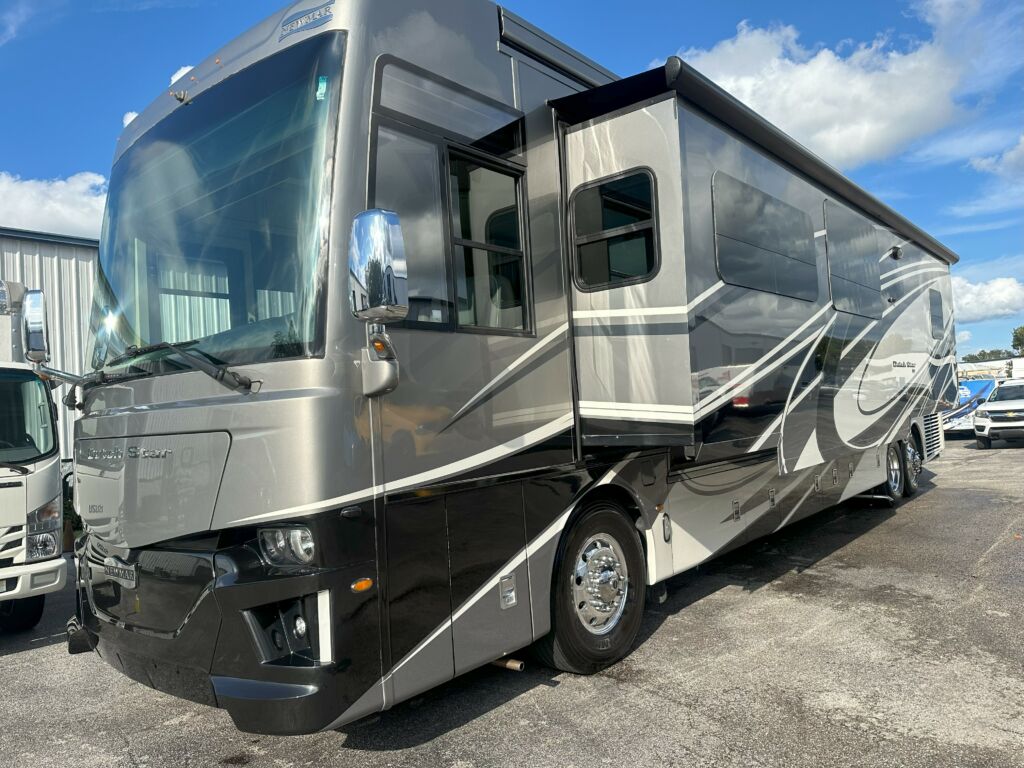
Class A (30–45 ft)
These are the big bus-style coaches with tall flat sidewalls and the highest roofs. They carry the most gelcoat, so they oxidize the most square footage and take the longest to correct and protect. The roof almost always needs proper equipment to reach and work safely, and a full detail with any oxidation work routinely runs into a second day. If you own a Class A, the single best money-saver is keeping it coated so the sidewalls never reach the chalky stage.
Class C (24–35 ft)
The ones with the over-cab bunk are shorter but fiddlier. The cab-over overhang and the seam where the van front meets the coach body both trap road film and streak, and the painted cab needs different handling from the gelcoat house behind it. A Class C is often a long single day rather than two.
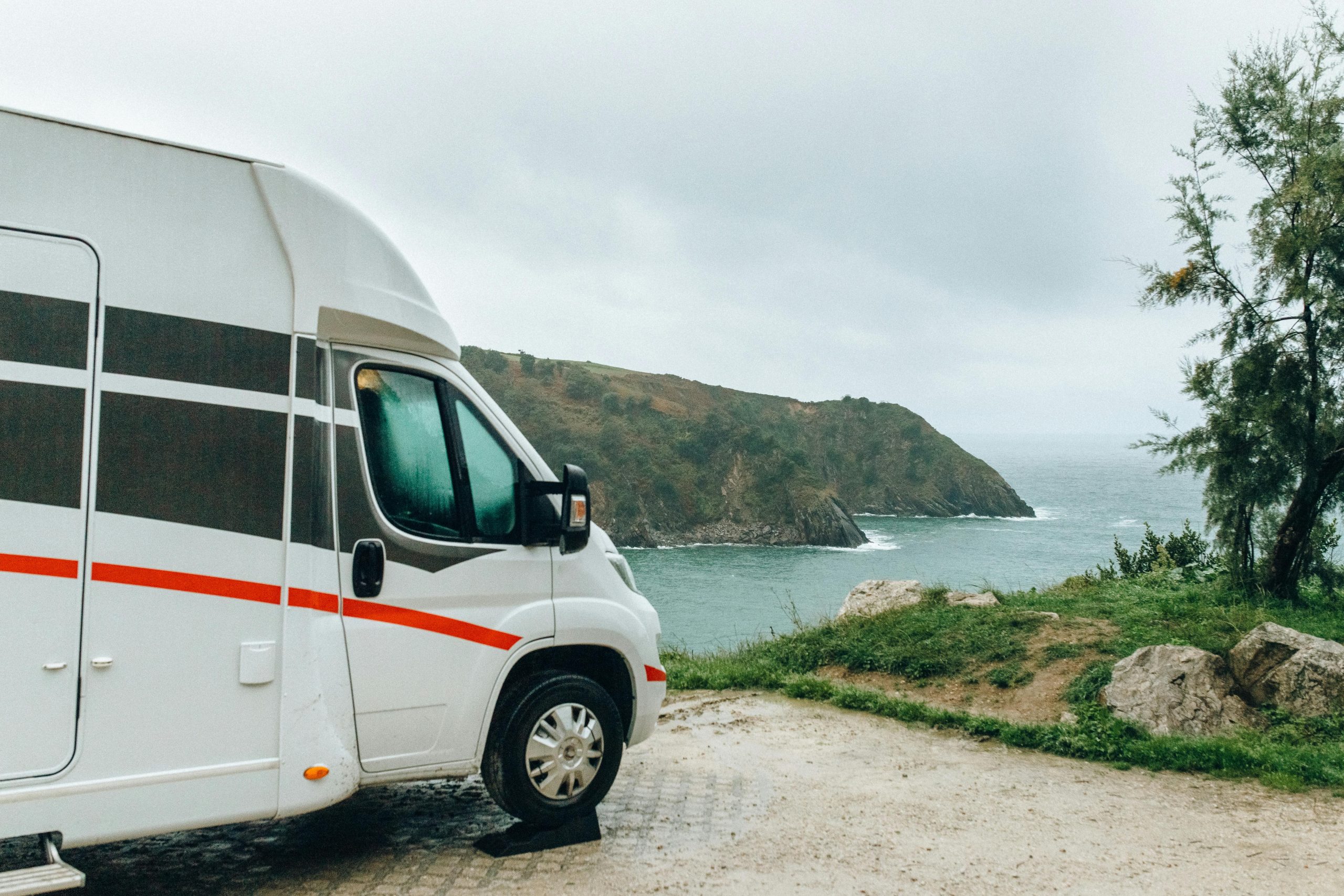
Class B camper vans
These are the quickest of the three and the closest to a large automotive detail. The body is usually painted automotive panel, so it can be paint-corrected and ceramic-coated much like a car, just with more of it. If you’ve been quoted by the foot and your rig is a Class B, you’re generally at the low end.
Whatever the class, the Central Florida enemy is identical: oxidation on the gelcoat and UV on everything. The class only changes how many hours it takes to stay ahead of it. Heavy fiberglass oxidation is its own service — here’s how we handle RV oxidation removal when a coach has gone chalky.
What does a motorhome detail cost in Central Florida?
Because surface area drives the work, motorhome detailing is quoted by the linear foot of coach length, then adjusted for condition. At Polished 2 Perfection’s published rates for Central Florida, the exterior tiers run:
| Service tier | Rate | What it covers |
|---|---|---|
| Maintenance wash | $10/ft | Full wash, roof cleaning, bug removal, wheels & tires |
| Protection | $15/ft | Everything above, plus paint sealant and a UV barrier |
| Enhancement | $20/ft | Adds a machine polish for light oxidation and water spots |
| Restoration | From $30/ft | Multi-stage compounding for chalky, heavily oxidized gelcoat (by estimate) |
Run two real coaches through that and the math is simple:
Large coaches cost more because there is simply more surface, and the roof alone needs special equipment to reach. The lever that moves the price most is condition, not length: a coach washed on schedule stays in $10-to-$20/ft territory, while one left to chalk over two summers crosses into restoration pricing. For the full price breakdown by every RV size and service, we keep a dedicated Central Florida RV detailing cost guide; this is the motorhome-specific short version.
How often should you detail a motorhome in Florida?
More often than the manufacturer’s booklet suggests, because Central Florida is one of the harshest finish environments in the country. For a coach that lives outdoors here, the realistic floor is a wash every four to six weeks and fresh paint protection two or three times a year if you rely on wax or sealant. Push the washes up during love-bug season in spring and early fall, when the acid in that splatter etches gelcoat within days if it bakes on in the sun. Owners who store under cover can stretch waxing to once or twice a year, a point RV forums and dealers broadly agree on; owners who park in the open do not get that grace. The alternative to the every-few-months wax cycle is a single ceramic coating that holds UV-and-bug protection for years. Whether it’s worth the upfront cost is its own question we work through separately.
When is it worth hiring a mobile detailer for your motorhome?
Be honest about two things: the roof and the gelcoat. If your coach only needs a wash and you have safe roof access, a day free, and RV-specific products, a DIY wash-and-wax is reasonable. The moment the gelcoat is dulling, the roof is streaking, or you’re looking up at a Class A roof with no safe way onto it, it’s a pro job, and correcting oxidation early costs a fraction of a full restoration later. The mobile part matters on a coach specifically: you don’t want to drive a 40-foot rig across town to a wash bay, and most owners don’t have a bay that fits one anyway. Our crew brings its own water and power and details the coach at your home, storage lot, or campsite — here’s how mobile RV and motorhome detailing across Central Florida works.
Key takeaways
- A motorhome detail isn’t a big car detail: surface area, roof height, and gelcoat make it its own job.
- Class drives the work: Class A is the longest and priciest, Class C is a fiddly single day, Class B is closest to an auto detail.
- Our pricing is per linear foot: $10–$20/ft to wash, protect or polish, and from $30/ft, by estimate, to restore oxidized gelcoat.
- Condition beats length as a cost driver — stay on a schedule and you stay out of restoration pricing.
- In Florida, wash every four to six weeks and protect two to three times a year, or coat it once with ceramic.
Frequently asked questions
How much does it cost to detail a motorhome?
In Central Florida it’s quoted per linear foot: roughly $10/ft for a maintenance wash, $15/ft to add sealant, $20/ft for a light-polish enhancement, and from $30/ft, by estimate, to restore heavily oxidized gelcoat. On those starting prices, a 30-foot coach starts at $300 for a wash and $600 for an Enhancement polish, and Restoration on a 40-foot Class A starts at $1,200.
What’s the difference between detailing a Class A and a Class C motorhome?
A Class A has the most sidewall and the tallest roof, so it takes the longest, needs roof equipment, and costs the most. A Class C is shorter but adds fiddly work at the cab-over bunk and the front-to-coach seam, and mixes a painted cab with a gelcoat body. Both fight the same Florida oxidation; the class mainly changes the hours.
How often should you detail a motorhome in Florida?
A coach stored outdoors needs a wash every four to six weeks and fresh wax or sealant two to three times a year, or a single ceramic coating that holds for years. Florida’s UV and love-bug acid strip protection faster than northern climates, so the schedule here is tighter than the brochure says.
How long does it take to detail a motorhome?
A straight exterior wash-and-wax is about four to six hours on a mid-size coach; a full interior-and-exterior detail is six to twelve hours; and a large Class A with oxidation removal or a ceramic coating routinely runs into a second day. There’s simply a lot of square footage, and the roof has to be worked from up top.
Do you come to me, or do I bring the motorhome to you?
We’re fully mobile across Central Florida and detail your coach on-site, in your driveway, storage lot, or campground, so you’re not driving a 40-foot rig to a shop. We bring our own water and power.
Ready for a number on your coach? Get a free motorhome detailing quote from Polished 2 Perfection, Central Florida’s mobile RV and motorhome detailing team. We come to you from Orlando to Ocala, The Villages, and Deltona.
Get a free motorhome detailing quote
Jason runs Polished 2 Perfection, a mobile auto, RV, and marine detailing service based in Central Florida. He and his team wash, detail, and ceramic-coat everything from travel trailers to 40-foot Class A motorhomes on-site across Orlando, Ocala, The Villages, and Deltona, so the advice here comes from real Florida driveways and storage lots, not a product label.