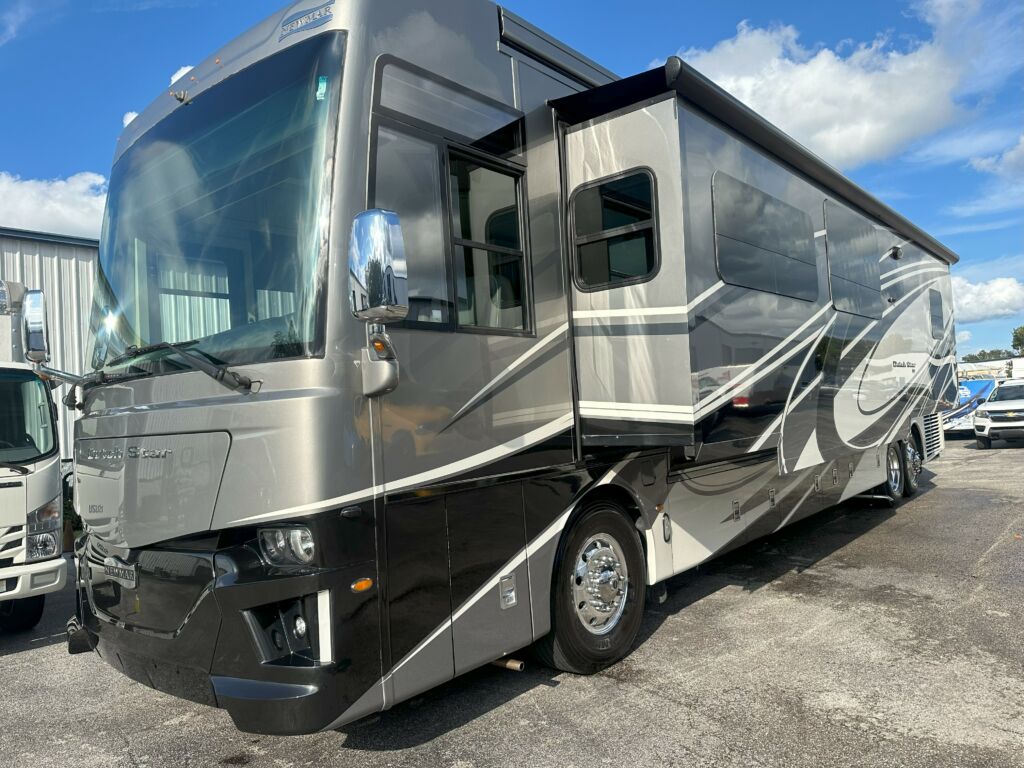
Professional RV exterior detailing and gelcoat restoration across Central Florida.
Short answer
Yes — most chalky, sun-faded RVs can be restored. Oxidation is a thin, dull layer of UV-degraded gelcoat, and machine compounding removes it to bring the shine back. Light-to-moderate cases polish out; severe cases need wet-sanding first.
In Central Florida, professional RV oxidation removal typically runs about $15–$25 per linear foot — roughly $450–$900+ for a 30-ft Class A — and the restoration only lasts if you seal it afterward with a ceramic coating or UV sealant. Under our sun, unsealed gelcoat starts hazing again within months.
If your motorhome or travel trailer has gone from glossy to a dull, powdery white that rubs off chalky on your hand, that is oxidation — and Florida gives RVs a harder time of it than almost anywhere. Below is exactly what causes it, the process we use to reverse it, honest cost ranges, and how to decide whether to tackle it yourself or bring in a pro.
What RV oxidation actually is
The white, glossy surface on most RVs is gelcoat — a pigmented resin layer over the fiberglass. Oxidation is what happens when ultraviolet light breaks down the top few microns of that resin. The surface loses its smooth, reflective layer and turns into a dull, porous, chalky film. That chalk is the degraded gelcoat itself, which is why it wipes off on a rag and why a quick wash never fixes it.
The good news: oxidation is a surface problem. As long as there’s enough gelcoat thickness left, removing that dead layer exposes healthy, glossy resin underneath. That’s the whole game — cut off the dead skin, reveal the good surface, then protect it.
Why Florida RVs oxidize faster
Because oxidation is UV-driven, sun exposure is the single biggest factor — and Central Florida stacks the deck. High year-round UV index, intense summer heat, and constant humidity accelerate gelcoat breakdown far faster than a northern climate where the RV is winterized under cover for months. An RV that sits in an Orlando driveway or an open storage lot can visibly chalk within a couple of seasons.
Is it too far gone to fix?
Almost never, but the severity decides the method. Here’s how detailers grade it:
The only true “too far gone” case is when the gelcoat has been sanded or worn so thin that there isn’t enough left to cut into without going through to the fiberglass. At that point the fix isn’t polishing — it’s a new coating or paint. A pro checks this before touching a buffer; on most RVs we inspect, there’s plenty of gelcoat to work with.
The four stages of RV oxidation
Which stage your gelcoat is in decides whether a buffer is enough — and whether this is a weekend project or a call to a mobile RV detailer who comes to the rig.
| Stage | What you see | What it takes |
|---|---|---|
| Light | Slight dullness, faint chalk on a wipe | Single pass of compound, then seal — realistic DIY |
| Medium | Noticeable haze, color looks flat | Aggressive cut plus a polish to bring the gloss back |
| Heavy | Obvious chalk, color badly faded | Two to three cutting stages — usually a pro job |
| Severe | Chalked through; compound brings back no shine | Wet-sanding — hand this to a professional |
The oxidation removal process, step by step
Here’s the sequence we follow on a full RV oxidation restoration. Skipping steps is where most DIY jobs go wrong.
1. Wash and decontaminate
A thorough wash, then a clay treatment to pull embedded grime out of the porous, oxidized surface. Compounding over contamination just grinds it in.
2. Test spot and grade
A small test area tells us how aggressive to go — which compound and pad combination cuts the oxidation without wasting gelcoat. This is also where we confirm gelcoat thickness.
3. Wet-sand (severe cases only)
If the chalk is heavy and rough, fine wet-sanding (typically high-grit) levels the dead layer so compounding can restore gloss. On light or moderate RVs this step is skipped entirely.
4. Machine compound
A rotary or dual-action buffer with a cutting compound removes the oxidized layer and brings back reflectivity. On a 30–40 ft rig this is the most labor-intensive stage — every square foot gets worked.
5. Polish and refine
A lighter polish clears any haze the compound left, deepening the gloss.
6. Seal or coat
Non-negotiable in Florida. Bare, freshly compounded gelcoat is more vulnerable than ever to UV — so we lock it in with a sealant or a longer-lasting ceramic coating (more below).
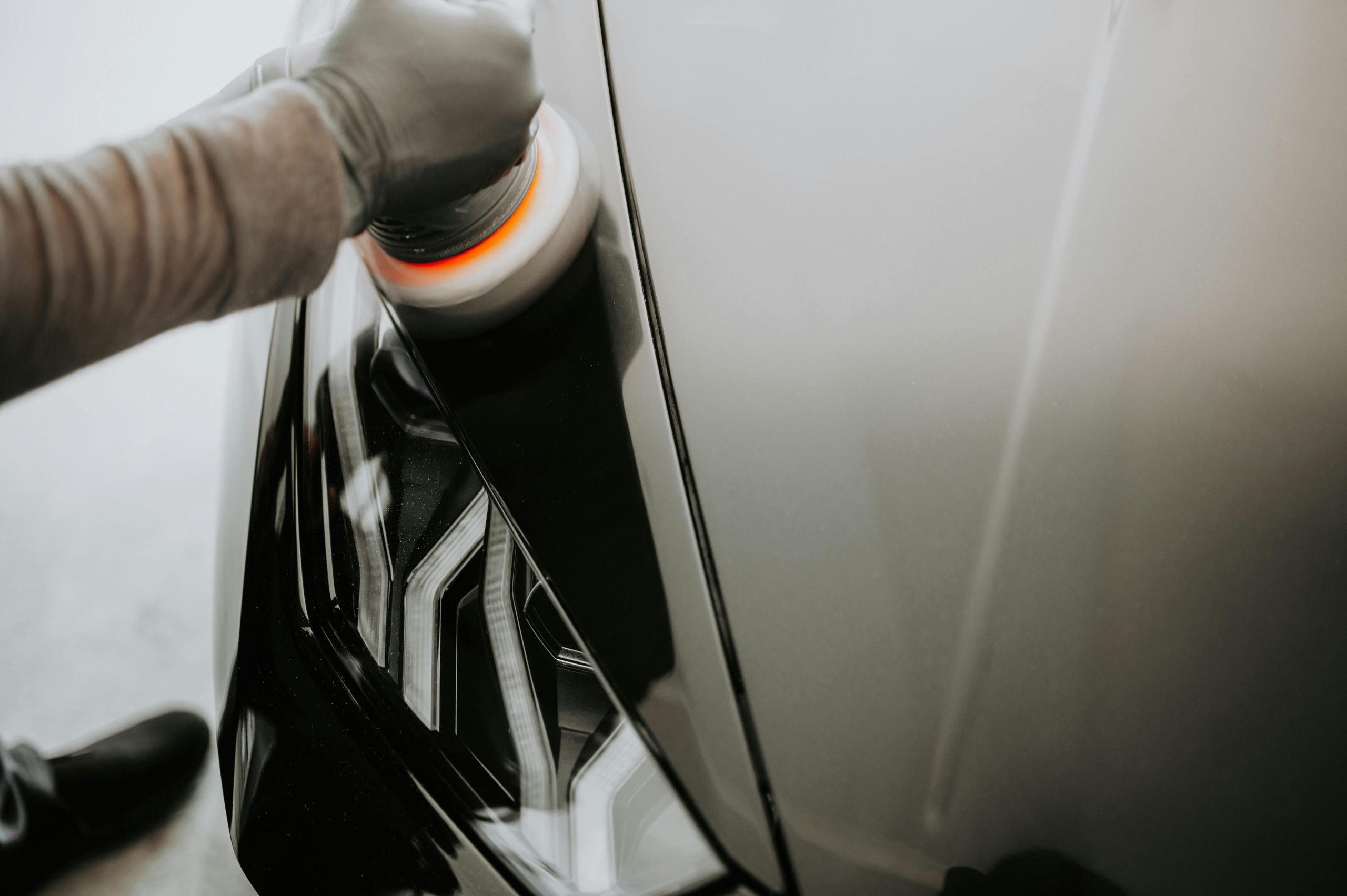
Machine compounding is the stage that actually restores the gloss — and the one that takes the hours.
What RV oxidation removal costs
Oxidation removal is usually priced by the linear foot, because a bigger rig is more surface and more buffer time. Ranges we see across the industry and in Central Florida:
| RV size | Typical oxidation removal + seal | Notes |
|---|---|---|
| Travel trailer (20–25 ft) | ~$300–$600 | Less surface; moderate oxidation |
| Class C (25–32 ft) | ~$450–$800 | Cab section adds detail work |
| Class A (32–40+ ft) | ~$600–$1,200+ | Full-body compound is labor-heavy |
| Add: ceramic coating | +$800–$2,500 | Longer protection vs. a basic sealant |
As a benchmark, hands-on oxidation buffing commonly runs about $15–$25 per linear foot, and full RV details range from roughly $200 to well over $1,000 depending on size and condition. Severe cases that need wet-sanding cost more because of the extra stage. These are ballparks — the honest way to price it is an in-person look at your RV’s size and oxidation grade.
DIY vs. hiring a pro
Plenty of owners successfully knock out light oxidation themselves with a consumer oxidation remover and a lot of elbow grease. Where it gets risky is moderate-to-severe gelcoat and the height of a Class A.
| DIY | Professional | |
|---|---|---|
| Best for | Light oxidation, smaller trailers | Moderate/severe, big rigs, wet-sand cases |
| Risk | Burning through thin gelcoat; uneven finish | Low — thickness is checked first |
| Time | A full weekend or more | Done in a day, at your location |
| Cost | $60–$200 in product | Priced by size (see above) |
| Ladders/height | You + a ladder on a 12-ft roofline | Crew + proper equipment |
The two honest reasons to call a pro: you can’t tell how much gelcoat you have left (burn-through is permanent), or the rig is simply too big to safely buff top-to-bottom off a ladder. If you’re in Central Florida and want it checked before you commit, that’s exactly what our mobile RV detailing team does on-site.
How to keep oxidation from coming back
Restoration is only half the job in Florida. Freshly compounded gelcoat has no protective layer, so it needs to be sealed the same day. Your options, shortest to longest lasting:
Wax — a good RV wax adds a few months of protection and gloss, but under Florida UV you’ll be reapplying seasonally. Synthetic sealant — lasts longer than wax, a solid middle option. Ceramic coating — the strongest UV and oxidation barrier, typically holding for a year or more and making future washes far easier. For a rig that lives in the Florida sun, a ceramic coating for your RV is the difference between doing this once versus every couple of seasons.
Key takeaways
- Oxidation is UV-degraded gelcoat — a chalky surface layer that machine compounding removes to restore gloss.
- Most RVs are restorable; only gelcoat that’s already too thin is a true “too far gone” case.
- Central Florida’s UV, heat, and humidity make RVs oxidize in as little as 2–3 years uncovered.
- Expect roughly $15–$25 per linear foot — about $450–$900+ for a 30-ft Class A, more if wet-sanding is needed.
- DIY works for light oxidation; call a pro for severe gelcoat, big rigs, or burn-through risk.
- Always seal the result — a ceramic coating is what keeps the chalk from returning under the Florida sun.
Frequently asked questions
Can badly oxidized, chalky RV fiberglass actually be restored, or is it too far gone?
In almost every case it can be restored. Oxidation is a thin surface layer of UV-damaged gelcoat, and machine compounding removes it to reveal glossy resin underneath. The only genuine “too far gone” situation is when the gelcoat has already been worn or sanded too thin to cut into — then it needs a new coating or paint rather than polishing. A pro checks gelcoat thickness before starting.
Should I remove RV oxidation myself or pay a professional?
Light oxidation on a smaller trailer is a reasonable DIY job with a consumer oxidation remover and patience. Bring in a pro when the oxidation is moderate to severe, when the rig is a tall Class A that’s unsafe to buff off a ladder, or when you can’t judge how much gelcoat is left — burning through it is permanent. Pros also finish in a day and seal the surface the same day.
How much does professional RV oxidation removal cost?
It’s usually priced by the linear foot — commonly about $15–$25 per foot. That works out to roughly $300–$600 for a travel trailer, $450–$800 for a Class C, and $600–$1,200+ for a large Class A. Severe cases that need wet-sanding cost more, and adding a ceramic coating is a separate line item. An in-person look at size and oxidation grade gives the accurate number.
How long does oxidation removal last before the chalk comes back — especially in Florida?
That depends almost entirely on what you seal it with. Bare compounded gelcoat can start hazing again within months under Florida UV. A wax buys a few months, a synthetic sealant longer, and a ceramic coating typically a year or more. Storing the RV covered or out of direct sun extends any of those significantly.
Do I need to wet-sand my RV, or is compounding enough?
Only severe, rough, heavily chalked gelcoat needs wet-sanding to level the dead layer before compounding. Light and moderate oxidation is handled by compounding and polishing alone. Wet-sanding removes more material, so it’s done carefully and only when the oxidation grade calls for it — another reason a test spot and thickness check come first.
Will a ceramic coating actually stop oxidation from returning?
A ceramic coating is the strongest readily available barrier against the UV that causes oxidation, and it dramatically slows the surface from breaking down again — while making washes easier. It isn’t permanent and doesn’t replace keeping the RV out of constant sun, but for an RV that lives in Florida it’s the most effective way to protect a fresh restoration and avoid repeating the whole process every couple of seasons.
Is RV oxidation the same as dirt or mold?
No. Dirt and mold sit on the surface and wash off. Oxidation is the gelcoat itself breaking down from UV, so it feels chalky and stays after washing. It has to be cut and polished out, not cleaned off.
Can you remove oxidation from an RV without a buffer?
Light oxidation can sometimes be worked by hand with compound and a lot of effort, but medium and heavy oxidation realistically need a machine buffer to cut evenly and avoid streaks. By hand on a 35-foot coach you will run out of arm before you run out of RV.
Do you have to do the RV roof too?
The roof takes the most direct sun and oxidizes first, but it is usually a different material and process than the fiberglass sidewalls. A full detail addresses both; an oxidation-removal job is often focused on the sidewalls and front cap, where the gloss and appearance matter most.

Jason Smith
Owner of Polished 2 Perfection Mobile Detailing (P2P), a mobile RV and auto detailing service based in Orlando serving Central Florida. Jason and his crew restore sun-faded, oxidized RVs on-site across the region.
Faded RV? We’ll come to you.
Polished 2 Perfection brings professional RV oxidation removal and ceramic coating to your driveway or storage lot anywhere in Central Florida.
Get a mobile RV quote